Search results
3 results found.

On The Edge of the Edge – The U.S. – Mexico Border
3 results found.
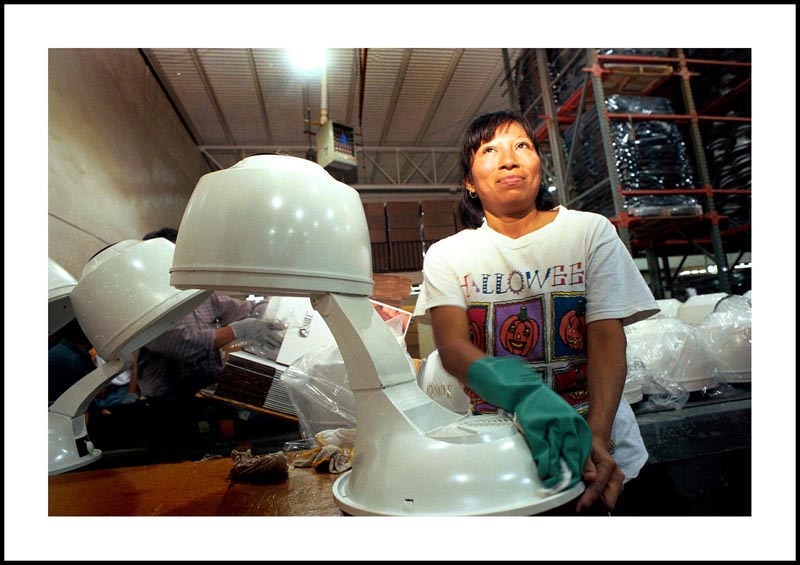
Banks lend money to Americans to buy homes they can’t afford. The homeowners live in a dream bubble, the American Dream bubble. The lenders sell their paper and ride off into their millionaire dream. Everyone’s dreaming.
In Juarez they’re dreaming too.
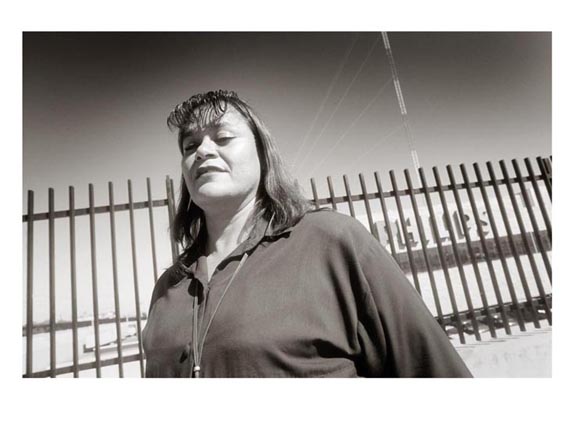
Carmen Sotelo Rodriquez is the face of the Post Global economy. She worked at a Phillips plant in Juarez,Chihuahua, Mexico. The plant had moved from three shifts to one shift and by 2002 the company had migrated most of its assembly operations to China. She is shown standing in front of the plant on the city’s south east side. This photo was shot on assignment for Bloomberg magazine.
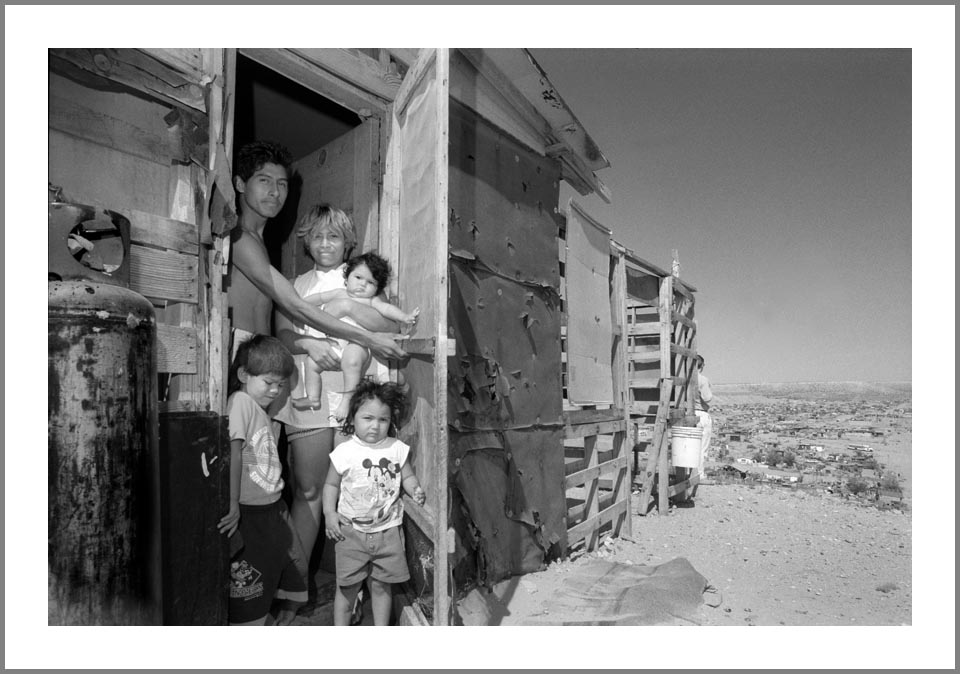
Commentary by the Editor
Juarez, Chih., Mex. — So how did this Cartel War begin and how does it end?
The Border Blog will not answer that today. We look for the things that make the heart tick and leave the fancy thinking to those that make these messes in the first place.
Roughly, for me, it began a long time ago, when the people who have most of the marbles understood that they didn’t have to do a thing about bringing along another class of people who had hardly any marbles at all. Impunity. No apologies. In Juarez the maquila industry began when someone figured out that Labor was a cheap product that Mexico had a lot of and that it could be exchanged for some major profit. Of course nothing so crass as that was said. Rather, this was the bright new day that would lead to a burgeoning “middle class,” and bring everyone up from the bottom. So they said. So the “development” of Juarez began. The powers that be brought willing companies looking for labor and they delivered “labor.” This labor, also known as the citizens of Mexico came from the far flung corners of Mexico. They had nothing else to do and would work at any price, went the theory. Everyone would be happy. You move here, we’ll give you subsistence (and societal dislocation), and we’ll go to the bank. Everyone will be happy.
Right?
When I first started photographing in the maquila factories of Juarez in the early 1980’s the salary in a maquila was $5 per day. Today it’s a little over $7. A full two dollar increase in 20 years. Imagine!
It wasn’t sustainable then and it isn’t now.
The promise of some kind of job, of rising above downright depraved poverty, was strong and people flocked to the border factories. First from Veracruz, then from Durango, then from Torreon and on and on.
If you were a Mexicano and wanted to improve your life without the terrible alternative of actually crossing the border and trying to make it work in El Norte, you headed to the maquilas of Juarez or Tijuana or Nuevo Laredo. If you made that journey you left your culture and customs behind. This was the brave new world.
Bienvenidos campesinos.